Verification cutoff: August 15, 2026, morning edition.
Executive Summary
The time-sensitive opportunity is local: reserve a seat for an August 27 beginner-friendly AI-safety workshop at the Frisco Library. The highest-value technical check is GitHub’s newly exposed wildcard setting for OAuth callback URLs—legacy single-URI apps have wildcard matching enabled unless it is turned off. GLM-5.3 is worth tracking for coding and local-model work, but its API and open weights are not available today.
Action Queue
1. Reserve a seat at the Frisco AI-safety workshop
Urgency: Immediate
Importance: ★★★★☆
What it is: “An AI powered future—reshaping work, crime and love” is a beginner-friendly, in-person workshop covering near-term AI capabilities, employment, scams and crime, AI companions, live demonstrations, forecasting exercises, Q&A, and networking.
Why it matters: The session is close enough for DFW readers to attend and broad enough to supply useful language, examples, and counterpoints for classroom discussion. It is not a technical certification course.
Recommended action: Review the agenda and RSVP if the framing is useful. Treat the workshop’s forecasts as claims to interrogate rather than settled predictions; capture two examples that could become short student discussion prompts.
Verified active: August 15, 2026; the live Meetup event page was checked directly.
Deadline: Event is Thursday, August 27, 2026, 6:00–7:30 p.m. CDT; register before capacity is reached.
Cost: Free RSVP event; no paid certificate or completion badge is advertised.
Requirements: Meetup RSVP, in-person attendance, and travel to Frisco Library Community Event Room B, 8000 Dallas Parkway, Frisco, Texas. No technical background is required.
Official registration: An AI powered future—reshaping work, crime and love
2. Disable unnecessary wildcard redirects in GitHub OAuth apps
Urgency: This week
Importance: ★★★★★
What it is: GitHub now supports up to ten explicit redirect URIs, opt-in expiring access and refresh tokens, and a visible per-URI wildcard setting for OAuth and GitHub Apps. Legacy apps with only one redirect URI have wildcard matching enabled.
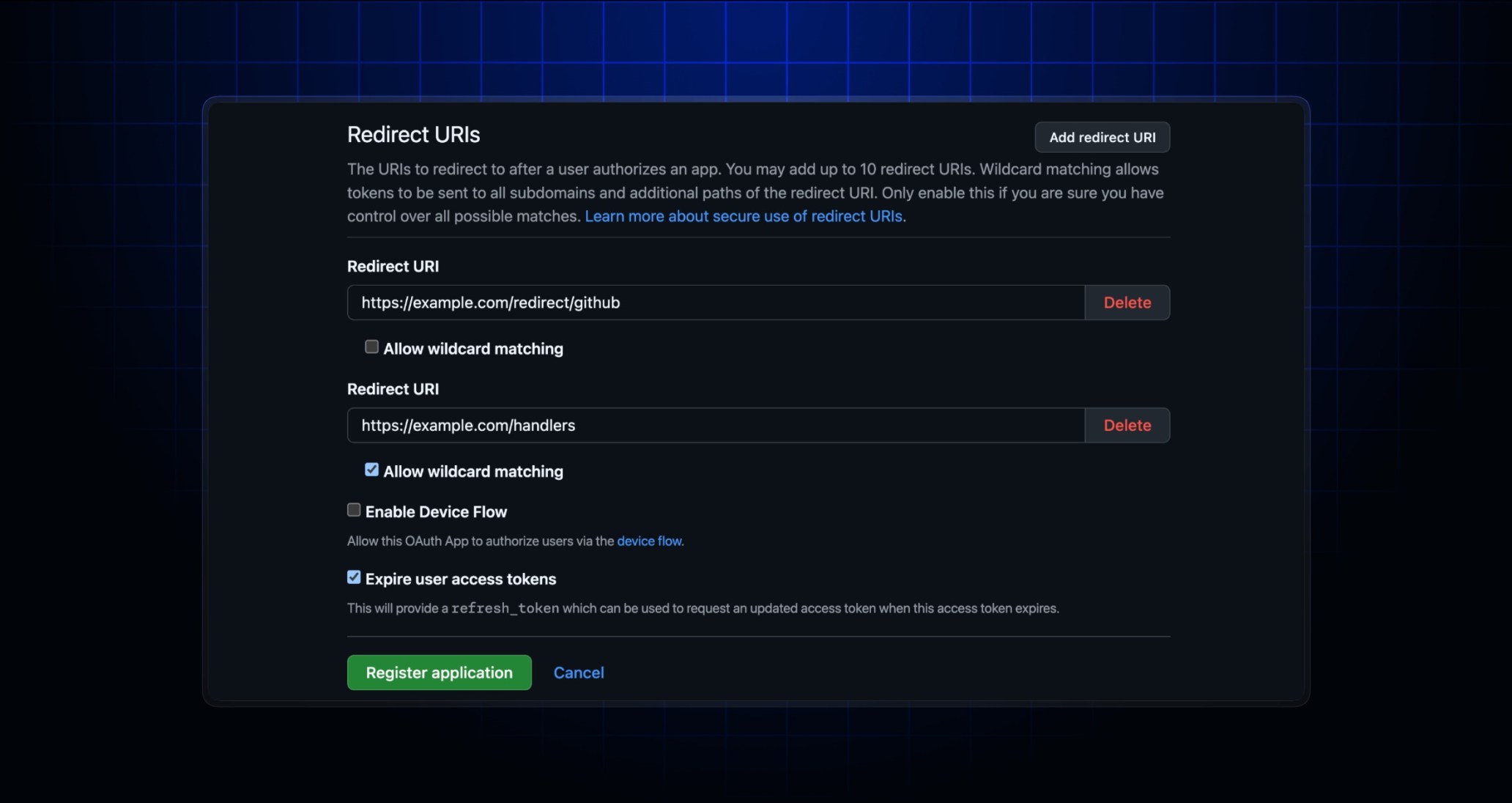
Why it matters: A wildcard can send an authorization code to any matching subdomain or additional path. That convenience becomes dangerous when an application domain hosts user-controlled content or routes.
Recommended action: Open the settings for every OAuth or GitHub App you own. Disable wildcard matching unless the architecture genuinely needs it; register explicit development, staging, and production callbacks instead. For OAuth clients, plan and test eight-hour access tokens with six-month refresh tokens before forcing the change on existing clients.
Verified active: August 15, 2026; GitHub’s August 14 changelog and linked documentation were checked directly.
Deadline: No vendor deadline; review legacy apps this week. GitHub Enterprise Server support arrives in version 3.23.
Cost: Included in GitHub’s application platform; no separate charge or regular price.
Requirements: Ownership or administrative access to a GitHub OAuth App or GitHub App, an inventory of valid callback URLs, and an authentication SDK that supports refresh tokens if rotating tokens are enabled.
Official announcement: Multiple redirect URIs and token refresh for OAuth apps
3. Track GLM-5.3, but wait for an actual downloadable release
Urgency: No deadline
Importance: ★★★★☆
What it is: Z.ai’s GLM-5.3 uses the same base model as GLM-5.2 with expanded post-training. The vendor reports large gains in coding, long-horizon agent work, vulnerability discovery, and exploit benchmarks.
Why it matters: It is a notable test of how far post-training alone can move a large open-model family. For local-LLM and coding-agent evaluation, however, “open-source” is not the same as a checkpoint that can be downloaded and inspected today.
Recommended action: Save the official model page and wait for the weights, license, serving instructions, and independent evaluations. Do not reorganize a local inference stack or buy a plan based only on vendor benchmarks. When artifacts arrive, test them with the same fixed coding and security-review set used for other models.
Verified active: August 15, 2026; Z.ai’s official model documentation and current pricing page were checked.
Deadline: No exact public weight-release deadline was verifiable on the accessible official documentation.
Cost: Reading the documentation is free. GLM-5.3 is currently available through the paid GLM Coding Plan; the API is marked “coming soon,” GLM-5.3 has no per-token price in the current official table, and no free checkpoint is presently available.
Requirements: None to save the documentation; a paid Coding Plan to use it now, or suitable hardware and a compatible runtime after weights and licensing are published.
Official model page: GLM-5.3 documentation
Official pricing: Z.ai model pricing
Free Courses & Certifications
The Frisco workshop is a genuinely free learning event, not a certification course. It advertises no certificate or completion badge.
AI
GLM-5.3’s most interesting claim is methodological: Z.ai attributes the gains to post-training rather than a new base model. Its security results also reinforce the need to evaluate coding models for dual-use behavior, not only code-completion quality.
Open Source
GLM-5.3 should not yet be treated as a downloadable open-weight release. The model family and vendor positioning may be open-oriented, but today’s usable access is through a paid coding plan while the API and public artifacts remain pending.
GitHub Discoveries
GitHub’s OAuth changes replace a common workaround—broad wildcard callbacks—with up to ten explicit redirect URIs. That is a practical security improvement for apps spanning development, staging, production, and multiple domains.
Web Development
Explicit callback URLs are easier to audit than wildcard rules. Web developers should document each redirect’s environment, owner, and retirement date alongside the app registration.
Linux & Self-Hosting
No GLM-5.3 self-hosting recommendation is warranted until weights, license, formats, and serving requirements are published and checked.
Newsletter Highlights
A Tech in Motion Dallas notification surfaced the Frisco workshop, and Techmeme surfaced GLM-5.3. Both were treated as discovery leads; the event page, Z.ai documentation, and GitHub changelog were checked directly.
Reddit Pulse
Reddit’s local-LLM community is already debating GLM-5.3’s delayed weights. The useful signal is caution: there is nothing local to benchmark until the artifacts and license actually arrive.
PKb Candidates
- OAuth redirect rule: prefer enumerated callback URLs; use wildcards only when the domain and every matching route are controlled.
- Model-release states: distinguish announcement, hosted access, API availability, downloadable weights, license, and reproducible evaluation.
- Workshop capture: record claims, evidence, uncertainty, and a classroom-ready question separately.
Trends Worth Watching
AI releases are becoming staged products: announcement, subscription access, API, weights, safety review, and independent reproduction can occur on different dates. “Available” increasingly needs a qualifier.
Related PTIR Coverage
- Evening Briefing — August 15, 2026 — MCP traffic controls and Google’s TPU 8t/8i split.
- Evening Briefing — August 14, 2026 — vCenter patching, AI-detector evidence, and deepfake verification.
- Morning Briefing — August 14, 2026 — DeepSeek V4 pricing, Docker VMM, and Gemini 3.7 Flash.
- Morning Briefing — August 7, 2026 — Agent Plugins 1.0 and portable agent configuration.
Sources Consulted
GitHub’s official changelog and OAuth documentation; Z.ai’s official GLM-5.3 and pricing documentation; the live Meetup event page; the maintained PTIR source roster; current technology newsletters used only for discovery; and read-only legacy-recipient, Spam, and Trash Gmail searches. One official, story-specific GitHub settings image was selected. No unchanged item from the previous edition was repeated.