Verification cutoff: August 14, 2026, morning edition.
Executive Summary
The time-sensitive task is financial rather than technical: DeepSeek changes V4 API pricing on August 16, introducing peak rates that can make V4-Pro output more than four times today’s rate. Update any cost assumptions before the change and move deferrable evaluations outside the published peak windows. If ten minutes remain, benchmark Docker’s new first-party VMM on one disposable Mac or Windows workload; treat Gemini 3.7 Flash as a priced candidate that still has to beat a fixed local evaluation.
Action Queue
1. Recalculate DeepSeek V4 costs before peak/off-peak pricing begins
Urgency: Immediate
Importance: ★★★★★
What it is: DeepSeek-V4-Pro is now generally available in the app, web interface, and API, with native Responses API support and official Codex setup instructions. At 16:00 UTC on August 16, DeepSeek will replace today’s flat V4 API rates with peak and off-peak prices; off-peak is half the new peak rate.
Why it matters: The published V4-Pro output rate changes from $0.87 per million tokens today to $1.98 off-peak or $3.96 peak. A coding-agent budget that assumes today’s flat rate can therefore be wrong by 2.3–4.6× after the change. The price windows also create a new scheduling variable for long-running, deferrable evaluations.
Recommended action: Update cost calculators and API-budget alerts now. If testing V4-Pro through Codex, use a disposable repository and fixed task set; schedule deferrable runs outside 01:00–04:00 and 06:00–10:00 UTC. In America/Chicago daylight time, those peak windows are 8:00–11:00 p.m. the prior day and 1:00–5:00 a.m. Do not run DeepSeek’s one-click setup script without reviewing it and backing up existing Codex configuration.
Verified active: August 14, 2026; DeepSeek’s GA announcement, live pricing table, and official Codex integration guide were checked directly.
Deadline: August 16, 2026 at 16:00 UTC (11:00 a.m. CDT).
Cost: Until the deadline, V4-Flash is $0.0028 cache-hit input, $0.14 cache-miss input, and $0.28 output per million tokens; V4-Pro is $0.003625, $0.435, and $0.87 respectively. Afterward, V4-Pro is $0.022/$0.66/$1.98 off-peak and $0.044/$1.32/$3.96 peak; V4-Flash is $0.007/$0.22/$0.66 off-peak and $0.014/$0.44/$1.32 peak. This is paid metered API access, not a free offer or trial.
Requirements: DeepSeek API account and key, billing balance, Codex CLI/desktop/IDE only if testing the official integration, a disposable repository, and a saved copy of current configuration.
Official release: DeepSeek-V4-Pro GA
Official pricing: DeepSeek models and pricing
Official Codex setup: Integrate DeepSeek with Codex
2. Benchmark Docker VMM before adopting the beta for daily work
Urgency: This week
Importance: ★★★★☆
What it is: Docker Desktop 4.86 introduces a public beta of Docker’s first-party virtual-machine monitor on macOS and Windows. Docker says it improves container startup, host-container file I/O, idle-memory return, and Windows stability; Linux support is planned for general availability.
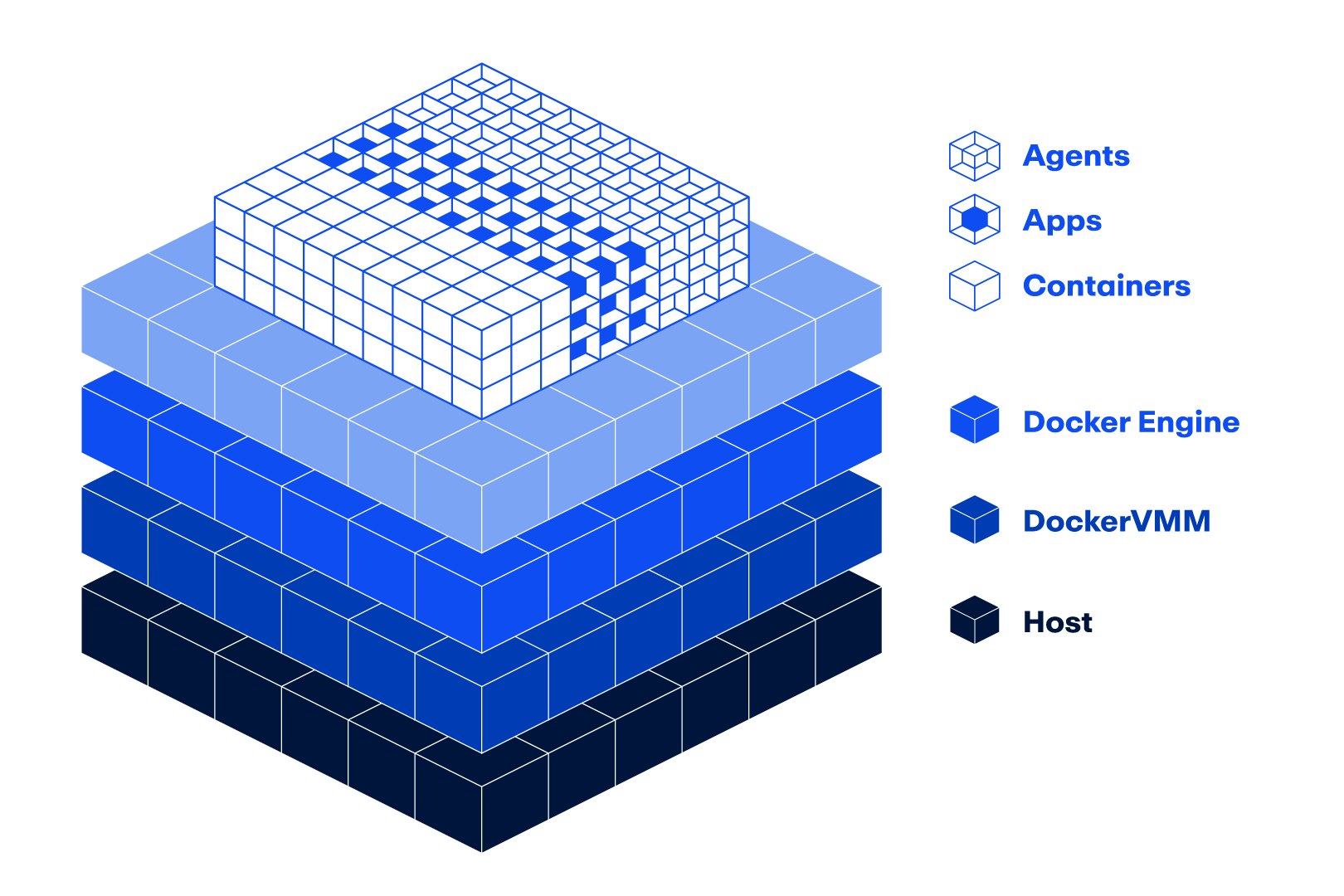
Why it matters: File sharing and memory retention are common friction points when a Mac hosts Linux containers. A first-party VMM could materially improve local web-development and self-hosting test loops, but vendor-wide performance claims do not predict a particular repository’s behavior.
Recommended action: Upgrade one noncritical Mac or Windows test machine to Docker Desktop 4.86, record the current engine, and benchmark the same cold start, bind-mounted build, test suite, idle-memory state, and restart-recovery sequence before and after. Keep the rollback path and do not migrate a classroom or production workflow based only on the announcement.
Verified active: August 14, 2026; Docker’s August 12 announcement, activation instructions, platform scope, and current pricing were checked directly.
Deadline: No deadline; the beta runs through fall, with general availability targeted for the end of October 2026.
Cost: Docker VMM is included with Docker Desktop. Docker Personal is genuinely $0 for qualifying individual use; Docker Pro is $11 per user/month monthly or $9 per user/month billed annually. Team and Business terms differ. This is beta software, not a trial.
Requirements: Docker Desktop 4.86 or later; macOS or Windows for the beta; a disposable/noncritical workload and baseline measurements. Linux support is not available until GA.
Official announcement and activation: Docker VMM public beta
Official download: Docker Desktop
3. Test Gemini 3.7 Flash with a fixed evaluation, not launch benchmarks
Urgency: This week
Importance: ★★★★☆
What it is: Google released Gemini 3.7 Flash for coding, agents, web development, and document-heavy workflows. It is available through Google AI Studio and the Gemini API, with a published introductory price through December 31.
Why it matters: The price is low enough to make a small bake-off practical, but Google also released the model only three weeks after 3.6 Flash. Rapid model turnover makes a reusable local evaluation more valuable than repeatedly accepting each vendor benchmark at face value.
Recommended action: Run three representative, non-sensitive tasks with fixed prompts and acceptance tests: a small bug fix with regression tests, a screenshot-to-web layout judged against explicit criteria, and extraction from a dense PDF with known answers. Record task success, retries, input/output tokens, latency, and human-review time. Compare against the model currently used for the same work before changing defaults.
Verified active: August 14, 2026; Google’s August 13 announcement, availability, model card link, and both introductory and regular prices were checked.
Deadline: Introductory pricing ends December 31, 2026.
Cost: Paid API usage is $0.75 per million input tokens and $3.75 per million output tokens through December 31; from January 1, 2027, the published regular prices are $1.50 input and $7.50 output. This recommendation does not classify AI Studio or Gemini subscriptions as free.
Requirements: Google AI Studio or Gemini API access, billing where required, synthetic or non-sensitive inputs, a fixed test set, and independent acceptance criteria.
Official announcement: Introducing Gemini 3.7 Flash
Official start page: Google AI Studio
Free Software
Docker VMM is included in Docker Desktop, and Docker Personal remains genuinely $0 for qualifying individual use. The beta is not open-source software and should not be confused with the Linux-native Docker Engine.
AI
DeepSeek-V4-Pro and Gemini 3.7 Flash both arrived with explicit agent/coding claims, but their useful comparison is operational: verified task success, total tokens, latency, reviewer time, data-handling constraints, and price at the time the task runs.
OpenAI’s Ultrafast mode was also verified, but it remains a limited preview for select API customers and has no public price. It is therefore a watch item, not a recommendation to claim or adopt.
Web Development
Gemini 3.7 Flash’s web-development claims are suitable for a controlled screenshot-to-layout task. Judge functional behavior, accessibility, responsive states, and design adherence—not visual plausibility alone.
Linux & Self-Hosting
Docker VMM is the virtualization layer beneath Docker Desktop on macOS and Windows; it is not a replacement for native Docker Engine on a Linux host. Linux support for this VMM is planned at GA, so no Linux migration is recommended today.
Newsletter Highlights
TLDR DevOps surfaced Docker VMM, and TLDR plus Techmeme surfaced the new AI-model and pricing announcements. They were used only as discovery leads; Docker, DeepSeek, Google, and OpenAI were checked directly.
PKb Candidates
- Model pricing belongs in evaluation metadata; a benchmark without the date and price window becomes misleading.
- Evaluate coding agents with fixed tasks, acceptance tests, retries, token counts, latency, and human-review time.
- Performance betas need before/after measurements on the real workload and an explicit rollback path.
- A desktop container VMM and the native Linux container engine solve different layers of the stack.
Trends Worth Watching
AI inference is fragmenting into time- and speed-based service classes: DeepSeek is introducing peak/off-peak pricing, while OpenAI is previewing a select-customer Ultrafast tier. Routing will increasingly depend on deadline, latency, and clock time—not only model quality and per-token price.
Related PTIR Coverage
- Evening Briefing — August 14, 2026 — vCenter patching and limits of AI-detector evidence.
- Evening Briefing — August 13, 2026 — LiteLLM supply-chain exposure and validation of AI-generated security patches.
- Morning Briefing — August 13, 2026 — SQLite WAL-reset integrity, Zed Delta, and Vercel’s storage migration.
- Morning Briefing — August 3, 2026 — GPT-5.6 price changes and price-performance discipline.
Sources Consulted
DeepSeek’s official V4-Pro release, pricing table, and Codex integration guide; Docker’s public-beta announcement, Desktop page, and pricing; Google’s Gemini 3.7 Flash announcement and linked model documentation; OpenAI’s Ultrafast announcement and API changelog; the maintained PTIR source roster, including Feeder additions; current newsletters used only for discovery; and read-only legacy-recipient, Spam, and Trash Gmail searches. One stable, story-specific diagram was selected from Docker’s original announcement. No unchanged item from the previous edition was repeated.