Verification cutoff: August 12, 2026, evening edition.
Executive Summary
Tonight’s useful work is bounded and concrete: affected GitHub contributors should finish 2FA enrollment before their account-specific deadline; Docker users should move to patched releases before experimenting with the new Docker VMM beta; and teams building agents should save the open Agent Baseline draft while its 35 controls are still accepting public review.
Action Queue
1. Check GitHub’s mandatory-2FA enrollment status
Urgency: Immediate
Importance: ★★★★★
What it is: GitHub is actively issuing account-specific 45-day enrollment notices to contributors who have not enabled two-factor authentication. GitHub’s official documentation confirms that missing the setup period and subsequent seven-day grace period restricts GitHub.com access until 2FA is enabled; existing automation tokens continue to function, but the locked account cannot authorize new apps or create new personal access tokens.
Why it matters: Source-code history, publishing repositories, and deployment credentials are high-value assets. An enrollment deadline is easier to satisfy deliberately now than during a locked-out maintenance or publishing task.
Recommended action: Open GitHub’s security settings directly—not from an email link—verify whether 2FA is already enabled, and enroll if required. Prefer a TOTP app as the primary method, add a passkey or security key as backup, and store recovery codes in a password manager or another secure offline location. Each reader must use the deadline shown in their own account; GitHub documents a 45-day setup period followed by a seven-day grace period.
Verified active: August 12, 2026; the notification’s authentication headers, deadline, setup URL, and GitHub’s mandatory-2FA documentation were checked.
Deadline: Account-specific; verify it directly in GitHub. GitHub documents a 45-day setup period followed by a seven-day grace period.
Cost: Genuinely free; GitHub does not charge for 2FA enrollment. A hardware security key is optional and separately purchased.
Requirements: A GitHub.com personal account, the account password, and a supported second-factor method. Save recovery methods before ending the setup session.
Official setup: GitHub 2FA settings
Official documentation: About mandatory two-factor authentication
2. Patch Docker first; test the new VMM second
Urgency: Immediate
Importance: ★★★★★
What it is: Docker Desktop 4.86.0 and Docker Engine 29.7.0 fix CVE-2026-17106, a destination-escape flaw in docker container cp. The same Docker Desktop release introduces a rebuilt, first-party Docker VMM in public beta on Mac and Windows, promising faster startup, improved file I/O, smarter memory release, and stronger Windows isolation.
Why it matters: Updating closes a container-to-host file-copy risk in a tool commonly used during development and recovery. On macOS, the VMM beta is also a practical opportunity to measure whether container builds and bind-mounted development trees feel faster—but security patching and beta evaluation are separate decisions.
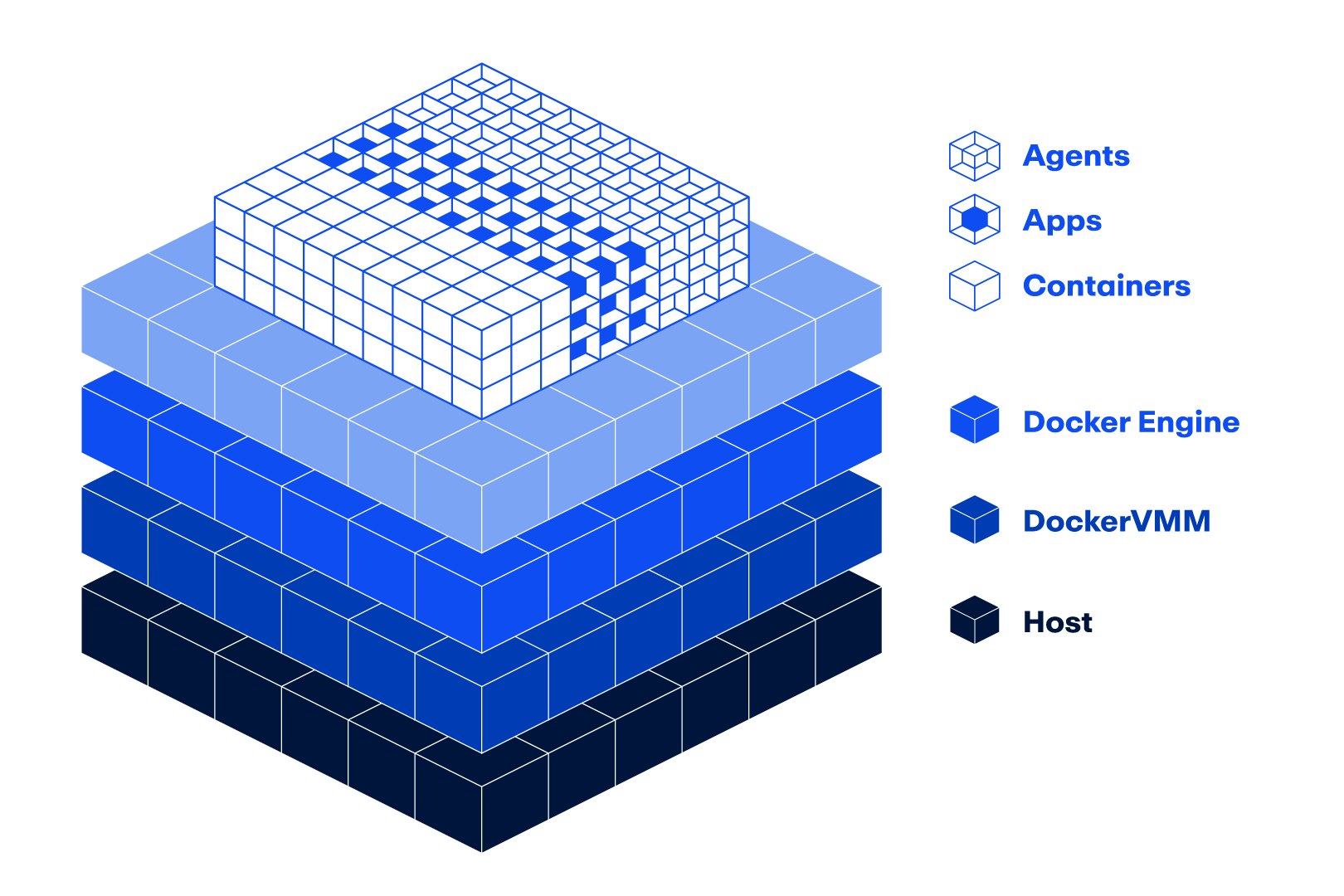
Recommended action: Record docker version, update Docker Desktop to 4.86.0 or Docker Engine to 29.7.0 or later, and confirm the new version before using docker cp with untrusted containers. On a noncritical Mac or Windows workstation, opt into Docker VMM only after the update, then compare startup time, one representative build, bind-mount I/O, and idle memory against the previous engine. Keep the old setting available until the beta proves stable for the actual workload.
Verified active: August 12, 2026; Docker’s security announcement, Desktop 4.86.0 release notes, and VMM launch article were checked directly.
Deadline: Patch now. The VMM beta has no enrollment deadline; Docker targets general availability and default-on status for new installs at the end of October 2026.
Cost: The security update and VMM beta have no separate charge. Docker Personal is $0 for eligible individual use. Optional paid plans are not required for this test.
Requirements: Docker Desktop 4.86.0+ on Mac or Windows for the VMM beta; Linux VMM support is planned for general availability. Docker Engine users should run 29.7.0+. Back up important local work and avoid beta testing on a production-critical workstation.
Official update: Docker Desktop 4.86.0 release notes and downloads
Official security notice: Docker security announcements
Official beta details: Docker VMM Public Beta
3. Save the Agent Baseline while the draft is still editable
Urgency: This week
Importance: ★★★★☆
What it is: Docker, Snyk, and Keycard published Agent Baseline v1.0-draft: 35 controls grouped into Discover, Constrain, Authorize, Observe, Validate, and Respond. The project is open source; its prose and figures are CC BY 4.0 and schemas are Apache-2.0.
Why it matters: The framework turns vague instructions such as “be safe” into testable questions about inventory, effective access, runtime boundaries, short-lived authority, trace evidence, adversarial validation, and incident response. It is a useful checklist for coding agents, MCP-enabled workflows, and classroom discussions even when Docker’s commercial governance product is not under consideration.
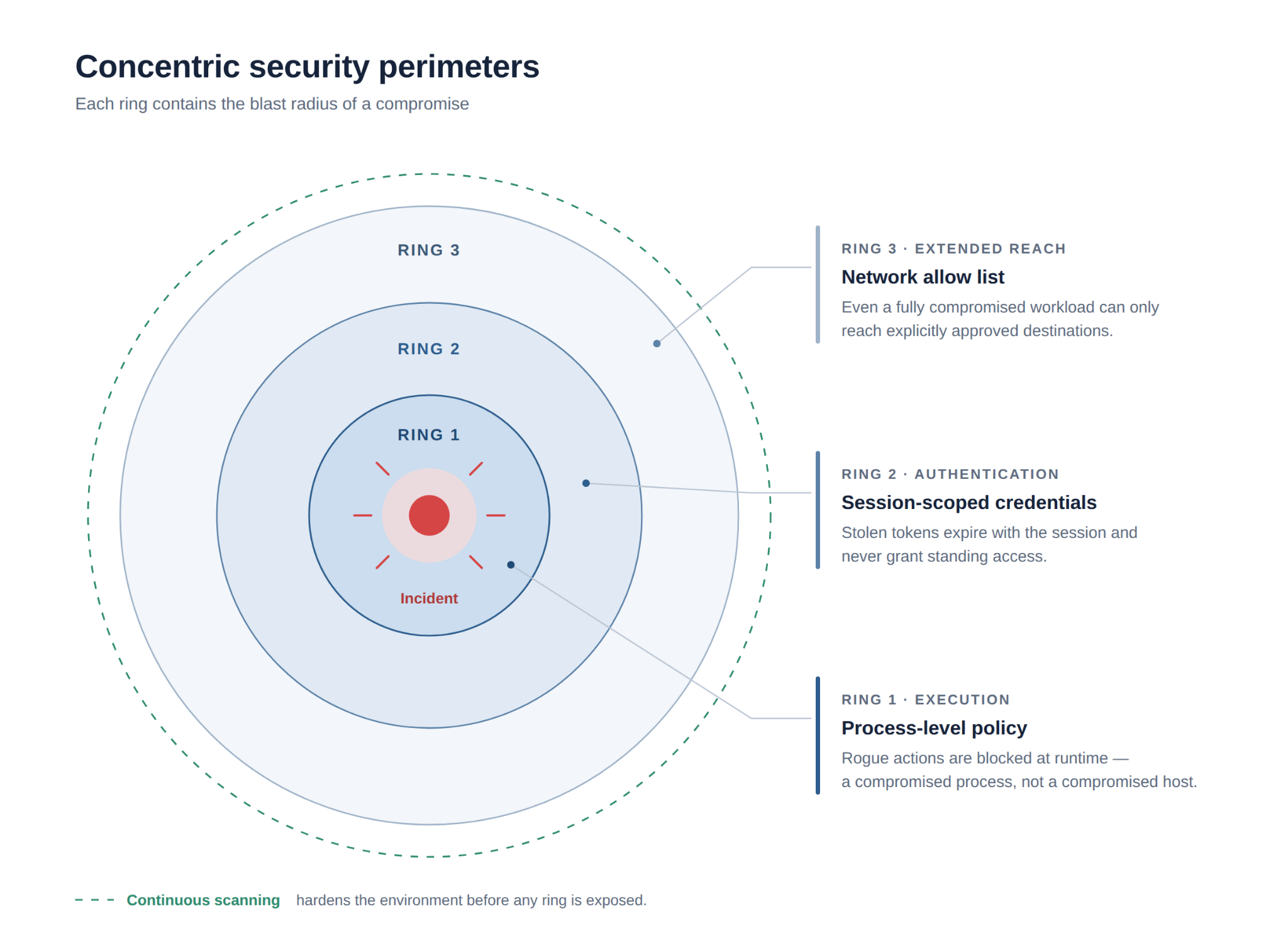
Recommended action: Save the six-outcome overview and test one real or planned agent against a single control in each outcome. Use the updated Prompt Is Not a Perimeter teaching lab for a short synthetic-data exercise. If a control is missing, ineffective, or disproportionately burdensome, submit evidence during the review window.
Verified active: August 12, 2026; the official controls catalog, licensing, publication date, and comment window were checked directly.
Deadline: Community comment closes September 30, 2026.
Cost: Genuinely free and open source; no trial, subscription, certificate, or badge is required. Commercial products mentioned by participating vendors are separate.
Requirements: A browser for the overview; a GitHub account only if submitting feedback. Classroom use should rely on fictional systems, synthetic records, and dummy credentials.
Official reference: Agent Baseline v1.0-draft
Direct controls catalog: 35 controls across six outcomes
Free Software
Agent Baseline’s schemas are Apache-2.0 and its prose and figures are CC BY 4.0. It is a genuinely free draft specification, not a trial or freemium service.
Free Courses & Certifications
The updated Prompt Is Not a Perimeter activity is a genuinely free classroom lab. It awards no certificate or badge and requires only public source material plus a fictional scenario.
AI
Agent Baseline’s durable idea is that trustworthy agent operation does not depend on the model recognizing every malicious instruction. Inventory, constrained execution, task-bound authority, correlated evidence, configuration-specific testing, and revocation must still work when the model makes the wrong decision.
Open Source
The Agent Baseline draft is inspectable and versioned in public. Its bare control identifiers are intended to remain stable, allowing policy documents and audit findings to cite controls without tying them permanently to a project name.
GitHub Discoveries
Mandatory 2FA notices are account-specific. A deadline observed in another user’s notice should never be copied into a checklist; verify the date in the affected account’s own security settings.
Linux & Self-Hosting
Docker Engine users should check for 29.7.0 or later even if Docker Desktop and its VMM beta are irrelevant to their Linux host. The docker cp patch is the security action; VMM evaluation is optional.
Newsletter Highlights
A Docker product email surfaced the VMM launch, and a legitimate GitHub notice in the legacy recipient stream exposed an account-specific 2FA deadline. Both were treated as leads and verified against Docker’s release notes and security announcement or GitHub’s official documentation.
Teaching Corner
The existing canonical lab, The Prompt Is Not a Perimeter, now adds a six-row Agent Baseline pass. Students map a fictional document-summarizing agent to Discover, Constrain, Authorize, Observe, Validate, and Respond, then identify which controls actually reduce capability and which only express intent.
PKb Candidates
- Mandatory security deadlines should be recorded per account, not inferred from a general rollout date.
- Patch level and beta-feature evaluation are separate decisions.
- Agent security must remain effective when the model misclassifies a malicious instruction.
- Discover, Constrain, Authorize, Observe, Validate, and Respond form a durable agent-control lifecycle.
- Correlate intent, identity, policy, tool use, action, and outcome under a stable run or trace ID.
Trends Worth Watching
Container runtimes and agent runtimes are converging: Docker’s new VMM underpins both Desktop and Sandboxes, while the Agent Baseline describes controls that must follow agents across laptops, CI, and production. The useful trend is not a single vendor stack; it is runtime-enforced boundaries plus portable, auditable control language.
Related PTIR Coverage
- Morning Briefing — August 13, 2026 — SQLite WAL-reset integrity, Zed Delta, and Vercel’s Redis-to-DynamoDB migration.
- Morning Briefing — August 12, 2026 — AI provenance limits and Cloudflare’s H1 DDoS report.
- Morning Briefing — August 6, 2026 — task-scoped agent access controls.
- Evening Briefing — August 11, 2026 — GitHub rulesets, local Ollama in JetBrains, and a free ISC2 orientation.
Sources Consulted
GitHub’s official mandatory-2FA documentation and current rollout notice; Docker’s official security announcements, Docker Desktop 4.86.0 release notes, VMM launch article, and Agent Baseline overview; the Agent Baseline controls catalog; the maintained PTIR source roster; current technology newsletters used only for discovery; and a controlled read-only Gmail legacy-recipient, Spam, and Trash pass. Two stable, story-specific Docker diagrams were selected from the original publisher. No unchanged morning item was repeated.