PTIR — Daily Briefing — November 28, 2026
by
Executive Summary
Linux Mint 27 “Adrien” has entered beta with a substantial desktop and administration refresh. The most broadly useful change is a kernel-series manager that also supports LMDE, but the release is explicitly for testing and may contain critical bugs. Fedora Magazine also published a concrete PipeWire and SonoBus workflow for low-latency network audio; it is useful as a reproducible routing reference, not as a promise that Internet distance can be engineered away.
Action Queue
1. Read the Linux Mint 27 changes; test only in a disposable environment
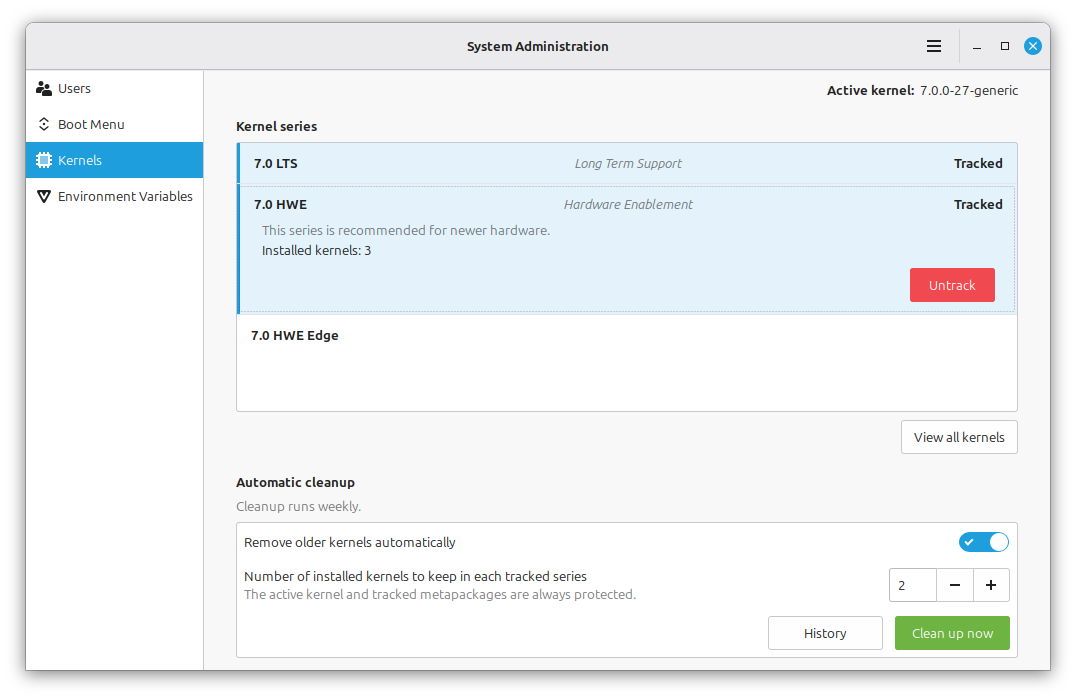
Linux Mint 27 is an LTS release planned for support through 2031. Its beta introduces Cinnamon 6.8 with full Wayland support, a new calendar and alarms service, a new terminal and system monitor, improved removable-drive write reporting, and consolidated administration tools. The kernel manager is particularly consequential because it supports both Linux Mint and LMDE: users select tracked kernel series, set retention, protect exceptions, and can review cleanup history.
- Action: Read the official feature page, record the LMDE-relevant changes, and use a VM or spare machine if testing the beta. Verify the ISO signature and checksum before booting it; do not replace a daily installation.
- Urgency: This week
- Importance: ★★★★★
- Verified active: November 28, 2026
- Deadline: None; the stable release date is not stated
- Cost: Free and open source; no regular paid price
- Requirements: 64-bit test hardware or a VM; 2 GB RAM minimum (4 GB recommended), 20 GB disk minimum (100 GB recommended), and signature/checksum verification
- Official beta announcement: Linux Mint 27 “Adrien” beta
- Official feature guide: What’s new in Linux Mint 27
- Official verification guide: Verify a Linux Mint ISO
2. Save Fedora’s PipeWire routing recipe as an audio-lab reference
Fedora’s guide combines SonoBus, qpwgraph, a USB audio interface, wired headphones, and temporary PipeWire settings. Its strongest contribution is the explicit signal path and troubleshooting sequence: start at 48 kHz with a 128-sample quantum, move to 256 if xruns appear, inspect connections visually, and separate local interface latency from network jitter.
- Action: Save the routing diagram and commands in the Project Paranoia notes; if testing, use a noncritical Fedora session and restore the default PipeWire quantum afterward.
- Urgency: No deadline
- Importance: ★★★★☆
- Verified active: November 28, 2026
- Deadline: None
- Cost: The guide, SonoBus, qpwgraph, PipeWire, and the listed Fedora/Flathub packages are free; an audio interface and wired monitoring hardware are required for the demonstrated workflow
- Requirements: Fedora with PipeWire, wired Ethernet for remote sessions, a USB audio interface, wired headphones, and an instrument or microphone; Bluetooth monitoring is unsuitable for the stated latency target
- Official/community source: Real-Time Jamming on Fedora with SonoBus and PipeWire
- Official SonoBus project: SonoBus
Linux & Self-Hosting
Linux Mint 27’s administration work is more important than its collection of new desktop applications. Kernel tracking and retention become explicit policy instead of a sequence of individual package decisions, and removable-drive progress now reflects data actually written rather than data still sitting in cache. Both changes reduce a class of silent operational mistakes.
Related prior PTIR coverage: November 27’s Ubuntu administration and credential briefing.
Open Source
The beta also replaces Linux Mint’s older installer with the Live Installer already used by LMDE, narrowing implementation differences between the Debian- and Ubuntu-based editions. That does not make the two editions interchangeable, but it is a concrete sign that shared Mint tooling is becoming less base-specific.
Newsletter Highlights
An XDA newsletter surfaced the Mint beta, but the release details, requirements, warnings, and download-verification steps were checked against Linux Mint’s own announcement and documentation before inclusion.
PKb Candidates
Kernel policy record: Track the intended kernel series, retention count, protected kernels, reason for each exception, cleanup history, and recovery path.
Low-latency audio test record: Preserve interface and driver, sample rate, quantum, measured xruns, local round-trip latency, network jitter buffer, PipeWire graph, and the command used to restore defaults.
Trends Worth Watching
Desktop Linux projects are turning historically fragile command-line maintenance into explicit, inspectable policy. The useful standard is not merely a friendlier settings panel: it is whether the interface exposes state, exceptions, history, and a reversible recovery path.
tags: linux - linux-mint - lmde - fedora - pipewire - audio - open-source - digital-preservation