Verification cutoff: August 22, 2026, morning edition.
Executive Summary
Three actions clear the bar. Rust developers should check local Cargo caches for several briefly available malicious crate versions. ChatGPT-authenticated Codex workflows should move off GPT-5.4 and GPT-5.4 mini before their August 31 retirement. Stark’s new Claude connector is worth a controlled accessibility-verification exercise during its no-card two-week trial, but neither AI nor an automated scan proves compliance.
Action Queue
1. Scan the local Cargo cache for compromised crates
Urgency: Immediate
Importance: ★★★★★
What it is: The Rust Security Response Team confirmed that a malicious proc-macro1 crate used a build script to download a payload. Briefly published versions of arrayref, internment and append-only-vec were also affected, apparently after the maintainer’s computer or credentials were compromised. The malicious packages have been removed or corrected on crates.io.
Why it matters: A deleted package can still remain in a developer’s local Cargo cache or build history. This is a compact example of why registry cleanup does not finish incident response on endpoints.
Recommended action: Run the Rust team’s published find command against ~/.cargo/registry/cache. If it returns a match, preserve the path and relevant lockfile/build evidence, disconnect the affected project from secrets, and follow the official advisory rather than merely deleting the cached archive.
Verified active: August 22, 2026; the Rust Security Response Team’s August 20 advisory was checked directly.
Deadline: Immediate for systems that used Cargo on August 20 or consume the named crates; otherwise check this weekend.
Cost: Free; no regular price.
Requirements: A Linux or macOS account with a Cargo registry cache. Windows users should inspect the equivalent Cargo home cache.
Official command and affected versions: Rust supply-chain advisory
2. Remove GPT-5.4 references from ChatGPT-authenticated Codex workflows
Urgency: This week
Importance: ★★★★☆
What it is: OpenAI’s current rate card says GPT-5.4 and GPT-5.4 mini will retire in Codex for users signed in with ChatGPT on August 31, 2026. OpenAI directs users to GPT-5.6 Terra and GPT-5.6 Luna respectively. API-key use and OpenAI API access are not affected by this Codex-specific retirement.
Why it matters: Saved commands, course notes or automation documentation that name an old Codex model can fail or silently require a manual choice after the cutoff. The distinction between ChatGPT-authenticated Codex and API-key use prevents an unnecessary migration of unaffected API applications.
Recommended action: Search Codex configuration, shell aliases, project instructions and internal documentation for gpt-5.4 and gpt-5.4-mini. Test Terra or Luna on one representative task before changing a shared default.
Verified active: August 22, 2026; OpenAI’s official rate card was checked directly.
Deadline: August 31, 2026.
Cost: No separate migration charge. Included plan limits are unchanged; purchased-credit rates vary by model and workspace. GPT-5.6 Sol promotional purchased-credit pricing is listed through at least November 21, 2026, but is not needed for this migration.
Requirements: Only ChatGPT-authenticated Codex configurations that explicitly select the retiring models. API-key integrations are out of scope.
Official details: ChatGPT rate card
3. Verify one Stark accessibility finding instead of trusting the scan
Urgency: This week
Importance: ★★★★☆
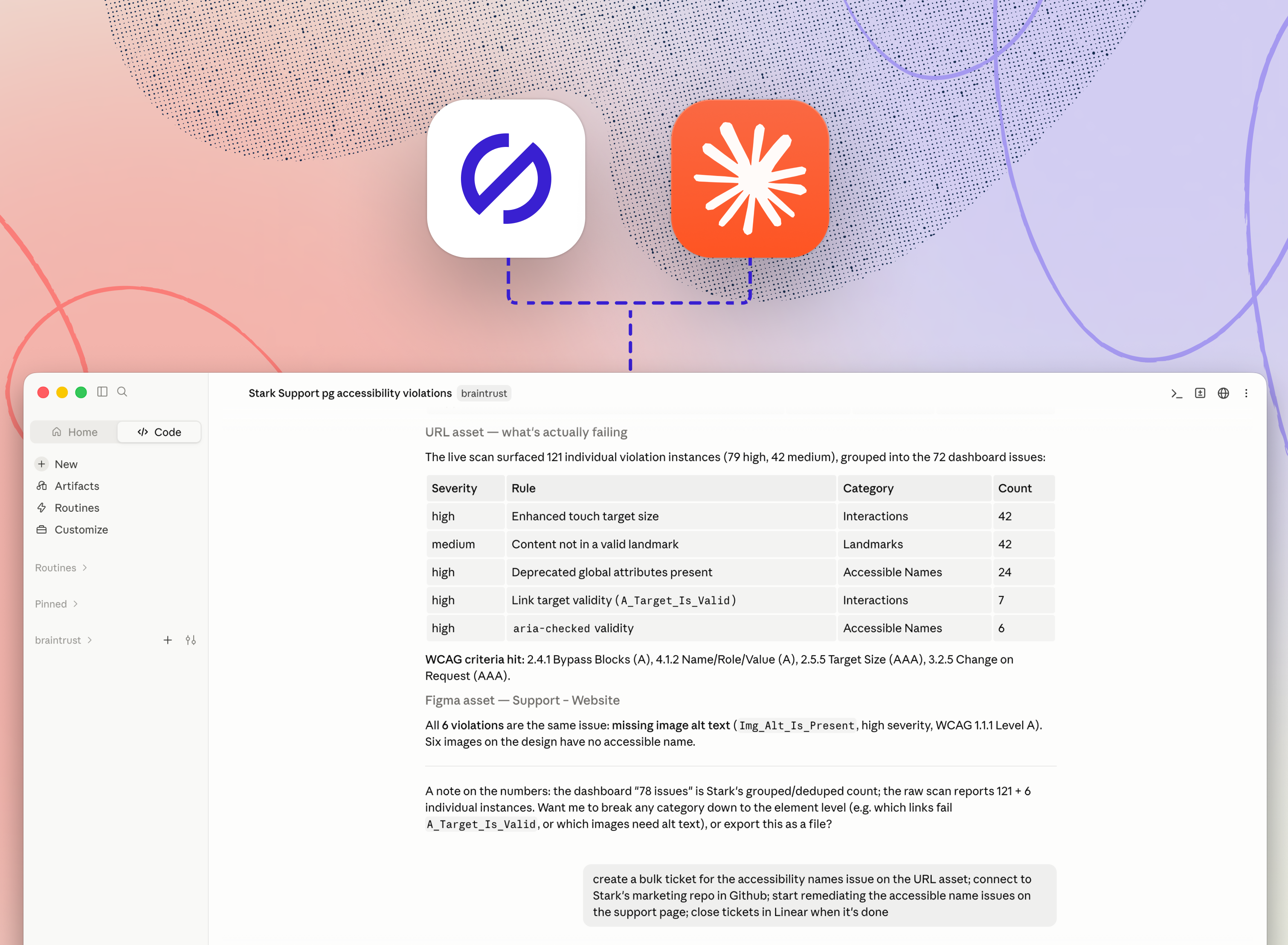
What it is: Stark added an accessibility connector to Claude. It can create and scan assets from public URLs, source code, Figma files, mobile builds and Storybook libraries, then bring violation data into a Claude conversation. Stark offers a two-week trial without a credit card.
Why it matters: The connector can make accessibility evidence easier to discuss during web-development work, but generative explanations and automated scans still miss contextual questions such as whether alternative text communicates an image’s purpose or whether keyboard order makes sense.
Recommended action: Use a public practice page with the new AI Accessibility Scan Verification Lab. Confirm one finding manually, fix it, rerun the scan and record one limitation. Set a reminder before the trial ends; do not upload private student or institutional material.
Verified active: August 22, 2026; Stark’s announcement, connector link, trial terms and pricing page were checked directly.
Deadline: No enrollment deadline; the trial lasts 14 days after activation.
Cost: Two-week trial, no credit card required. This is a trial, not permanently free access. Regular team pricing starts at $198 per user/year with a three-seat minimum; broader platform plans start at $2,500/year. Claude access may carry separate plan limits or costs.
Requirements: Stark account, Claude account with connector access, and a non-sensitive test asset.
Official connector and trial: Stark for Claude
AI
The Codex model retirement has a precise boundary: ChatGPT-authenticated Codex is affected; API-key use is not. Stark illustrates a second boundary: AI can interpret scanner output, but it cannot turn automated evidence into a defensible compliance claim by itself.
Open Source
The Rust response is notable for publishing exact package names, exposure windows and a local-cache command. That gives developers an actionable endpoint check after registry-side cleanup.
Web Development
The Stark connector can shorten the path from scan to explanation and repair, but the useful workflow ends with an independent manual check and a reviewed HTML change.
Linux & Self-Hosting
Cargo’s user-level cache can retain a removed malicious package. Registry remediation and endpoint remediation are separate steps, especially on long-lived development or build hosts.
Newsletter Highlights
TLDR Information Security surfaced the Rust incident, and TLDR Design surfaced the Stark connector. Both leads were verified against the publishers’ official sources. Techmeme’s overnight items were reviewed; the Codex deadline was taken from OpenAI’s current documentation rather than secondary reporting.
Teaching Corner
The new AI Accessibility Scan Verification Lab asks beginning web students to scan one non-sensitive page, manually verify a reported violation, repair the HTML and explain one limitation of automated accessibility testing. The full reusable activity lives on idtprof.net.
PKb Candidates
- Registry cleanup versus endpoint cleanup: deleting a malicious package upstream does not remove cached copies or build artifacts.
- Scope a deprecation precisely: authentication route and product surface can determine whether a migration applies.
- Accessibility evidence hierarchy: automated scan, manual verification and human usability review answer different questions.
Trends Worth Watching
Software tools are publishing increasingly precise operational boundaries: named malicious artifacts, product-specific model retirements and explicit scanner limitations. The common advantage is testability—claims become more useful when they include a command, affected surface or independent verification step.
Related PTIR Coverage
- Daily Briefing — August 23, 2026 — GitHub’s Secure Open Source Fund deadline, local-LLM serving choices and publishing continuity.
- Evening Briefing — August 21, 2026 — Red Hat Summit: Connect Dallas, NetScaler remediation and Slack Code permission boundaries.
- Morning Briefing — August 21, 2026 — Apple Messages in ChatGPT, Bun 1.4 and Rust 1.98.
Sources Consulted
The Rust Security Response Team’s supply-chain advisory; OpenAI’s current ChatGPT and Codex rate card; Stark’s official Claude-connector announcement, trial and pricing pages; overnight newsletters; the maintained OPML source roster; the prior PTIR; and read-only legacy-recipient, Spam and Trash searches. Stark’s official connector screenshot was selected as the single visual because it directly shows the accessibility-report workflow rather than generic branding.