PTIR — Daily Briefing — November 26, 2026
by
Executive Summary
Three developments merit attention. 1Password disclosed that an attacker used a compromised employee GitHub account to reach source code, CI/CD, and backend systems, copying limited account metadata for a subset of customers; vaults, passwords, and Secret Keys were not affected. JetBrains rebuilt its Kotlin agent benchmark around harder multi-file work, private code, restricted-network runs, and cost data. TCEA assembled a useful set of small classroom web tools, with an important reminder that public availability is not approval for student data.
Action Queue
1. Treat unexpected 1Password recovery or invitation messages as phishing
1Password says customers do not need to change their account password or Secret Key. The practical response is narrower: distrust unexpected recovery, invitation, text, or phone contact that invokes 1Password, and open the app or type the official address yourself.
- Action: Review any unexpected 1Password recovery or invitation message independently; report suspicious contact to 1Password support. If 1Password directly notified an account about an exposed invitation or provisioning token, follow that notice.
- Urgency: Immediate
- Importance: ★★★★★
- Verified active: November 26, 2026
- Deadline: None published
- Cost: Free; no purchase or password rotation is requested
- Requirements: A 1Password account only if checking account-specific notices; otherwise the official incident report is public
- Official source: 1Password security-incident update
2. Use Kotlin Benchmark 2.0 as a shortlisting tool, not a universal ranking
The new 100-task suite filters out simple edits, includes 30 private JetBrains tasks, blocks solution lookup during open-source runs, and reports cost, tokens, latency, and steps. Its leaders differ across public and private code, reinforcing the need to test agents on representative local work.
- Action: Compare two plausible configurations on the official leaderboard, then design a small evaluation using representative Kotlin tasks and tests from the target codebase.
- Urgency: This week
- Importance: ★★★★☆
- Verified active: November 26, 2026
- Deadline: None
- Cost: The benchmark and methodology are free; reported agent cost averages range from $0.02 to $3.13 per task in the current full-suite table, but actual service pricing varies
- Requirements: A browser for the published results; running the harness requires the public repository, model access, and a container-capable environment
- Official results: Kotlin Benchmark leaderboard
- Official methodology: Kotlin Benchmark methodology
3. Audit one teacher-made browser tool before adopting or rebuilding it
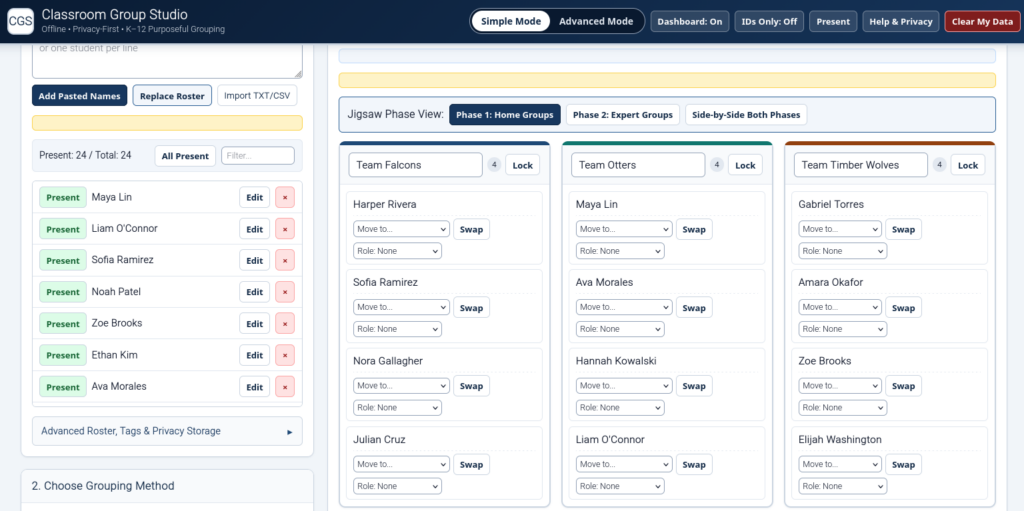
TCEA’s collection is strongest as a prompt for disciplined evaluation: small web tools can make concepts visible and reduce routine work, but educators still need to test instructional fit, privacy, accessibility, and failure behavior.
- Action: Run the linked classroom lab with invented data and make an adopt/adapt/rebuild recommendation for one tool.
- Urgency: No deadline
- Importance: ★★★★☆
- Verified active: November 26, 2026
- Deadline: None
- Cost: The article, examples, and lab are free; one promoted TCEA event is a member benefit and is not required
- Requirements: A modern browser and fictional sample data; do not enter student records or use a school identity unless the tool is institutionally approved
- Original article: Teacher-Made Classroom Tools
- Classroom lab: Audit a Browser-Based Classroom Tool
AI
Kotlin Benchmark 2.0 makes two evaluation problems unusually visible. Preventing live lookup is not the same as ruling out training-data contamination, so the private task set matters. Passing tests is also not the whole quality story; JetBrains plans follow-up static analysis for bugs, security issues, and code smells. The useful habit is to compare agent configurations within one benchmark version, then validate the shortlist on local tasks.
Cybersecurity
The 1Password incident is a useful example of security architecture limiting blast radius: backend compromise exposed account metadata but not vault contents or the secrets that protect them. It is also a reminder that names, email addresses, and account context can make targeted phishing more persuasive. The recommended response is verification discipline, not an unsupported mass password reset.
Teaching Corner
Audit a Browser-Based Classroom Tool gives beginning technology students a four-part test—instruction, privacy, accessibility, and reliability—before they recommend adopting, adapting, or rebuilding a classroom web app.
PKb Candidates
Agent-evaluation record: Preserve benchmark version, task provenance, network policy, private-task share, model and agent versions, repetitions, cost, tests, and residual contamination risk.
Classroom-tool intake checklist: Record learning purpose, data flow, accessibility checks, failure behavior, hosting owner, and institutional approval before students use a browser tool.
Trends Worth Watching
AI coding benchmarks are shifting from simple public-repository scoreboards toward harder tasks, private code, stricter execution controls, and cost-aware comparisons. That improves the signal, but the final evidence still has to come from representative work in the codebase that matters.
tags: cybersecurity - 1password - ai - kotlin - teaching - web-development - privacy