PTIR — Daily Briefing — November 21, 2026
by
Executive Summary
Signal has begun blocking supported OS-level AI features from reading conversations on screen, exposing a privacy boundary that encryption alone cannot solve. Microsoft has also set June 30, 2027 as the retirement date for To Do apps and warns that existing tasks and lists will not migrate into Planner. For local-AI experimenters, Thinking Machines Lab has released a 20GB Apache-licensed multimodal model intended for 32GB-class hardware.
Action Queue
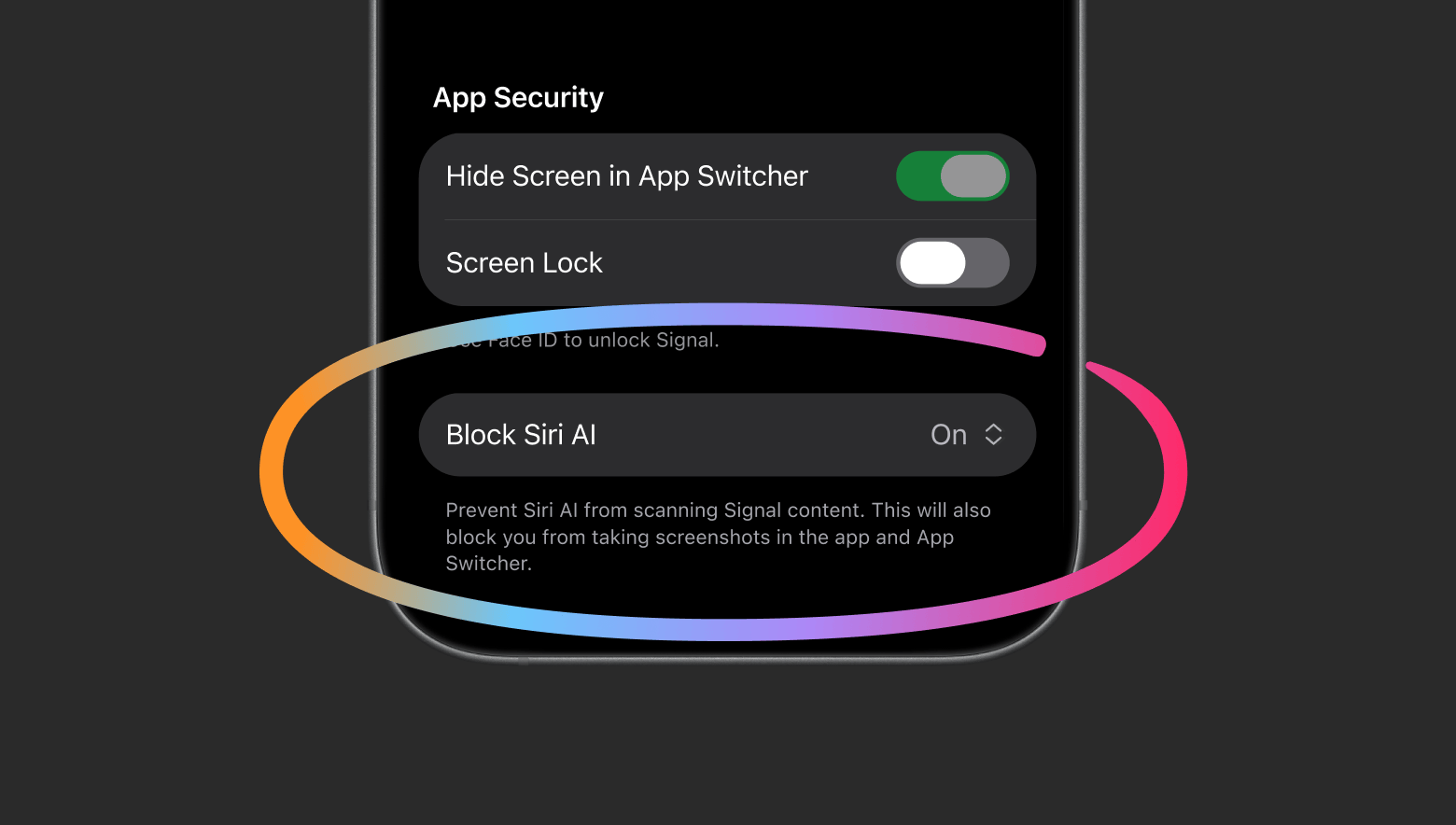
1. Keep Signal’s new AI screen protection enabled
Signal 8.37 or later enables Block Siri AI by default on iOS 27. The setting also blocks screenshots and screen recordings inside Signal. Signal cannot provide equivalent automatic protection on macOS 27, where it recommends adding Signal to the operating system’s Siri Excluded Apps list.
- Action: Update Signal, confirm Settings → Privacy → Block Siri AI remains on, and exclude Signal from Siri on macOS 27 when applicable.
- Urgency: Immediate
- Importance: ★★★★★
- Verified active: November 21, 2026
- Deadline: None
- Cost: Free
- Requirements: Signal 8.37+ and iOS 27+ for the iPhone control; macOS 27 for the exclusion recommendation
- Official guidance: Signal support
2. Inventory Microsoft To Do lists before Planner’s rollout changes the workflow
Microsoft To Do apps will retire across web, Windows, Mac, iOS, and Android on June 30, 2027. Existing tasks will not migrate to a new Planner private plan; Microsoft says they remain accessible through Planner only until the retirement date. Personal Microsoft accounts face an additional complication because Planner is not their replacement.
- Action: List important work, personal, and shared To Do lists; record reminders, attachments, shared membership, and integrations that Planner does not reproduce.
- Urgency: This week
- Importance: ★★★★☆
- Verified active: November 21, 2026
- Deadline: June 30, 2027
- Cost: No migration charge stated; Planner access depends on the organization’s Microsoft 365 license, with some premium features requiring additional licensing
- Requirements: Review work/school and personal accounts separately; Microsoft’s export instructions are not yet available
- Official guidance: Microsoft Support

3. Save Inkling 2 Mini for a qualified local-AI test
Inkling 2 Mini is an Apache 2.0 open-weights, multimodal looped transformer with a roughly 20GB checkpoint. Its model card supports Apple silicon with at least 32GB memory or other systems with roughly 32GB VRAM, and lists Ollama, llama.cpp, and several GPU frameworks. The publisher also warns that it may confidently invent facts, loop while debugging, or take destructive tool actions without confirmation.
- Action: Save the model card; test only on qualifying hardware and use a sandbox, turn limits, and confirmation before destructive operations.
- Urgency: No deadline
- Importance: ★★★☆☆
- Verified active: November 21, 2026
- Deadline: None
- Cost: Model weights are free under Apache 2.0; hardware, storage, electricity, and optional hosted inference are separate
- Requirements: About 20GB for the checkpoint; 32GB+ unified memory or VRAM recommended; compatible local runtime
- Official source: Inkling 2 Mini model card
AI
Signal’s change is a reminder that an OS agent can bypass an application’s privacy expectations without breaking its encryption. Agent security must account for screen reading, filesystem access, notifications, accessibility permissions, external tools, and retained copies.
Open Source
Inkling 2 Mini’s Apache 2.0 release is unusually transparent about its local requirements and operational limits. The architecture is noteworthy, but the model card itself is the more durable artifact: it states both supported hardware and the need for human confirmation around destructive actions.
Teaching Corner
Encryption Ends at the Screen asks students to trace an encrypted message from sender to recipient, then identify what changes when an OS-level AI feature reads the decrypted screen. The exercise keeps transport encryption, endpoint access, and permissions conceptually separate.
PKb Candidates
Endpoint privacy boundary: Record what happens to protected data after an authorized application decrypts, displays, caches, or exports it.
Task-manager migration inventory: Preserve list names, ownership, sharing, reminders, attachments, automation dependencies, and export status before changing platforms.
tags: signal - privacy - artificial-intelligence - microsoft-365 - local-llms - open-source - cybersecurity