PTIR — Daily Briefing — October 30, 2026
by
Executive Summary
Today’s useful pair is unusually coherent: first, adopt a complete-model integrity check for downloaded local LLMs; then reserve a free demonstration of using Dev Containers to give coding agents a reproducible, inspectable tool environment. The security lesson is that model provenance has to cover auxiliary memory and supporting components—not merely the familiar backbone weights or a malware scan.
Action Queue
1. Add complete-model verification to the local-LLM checklist
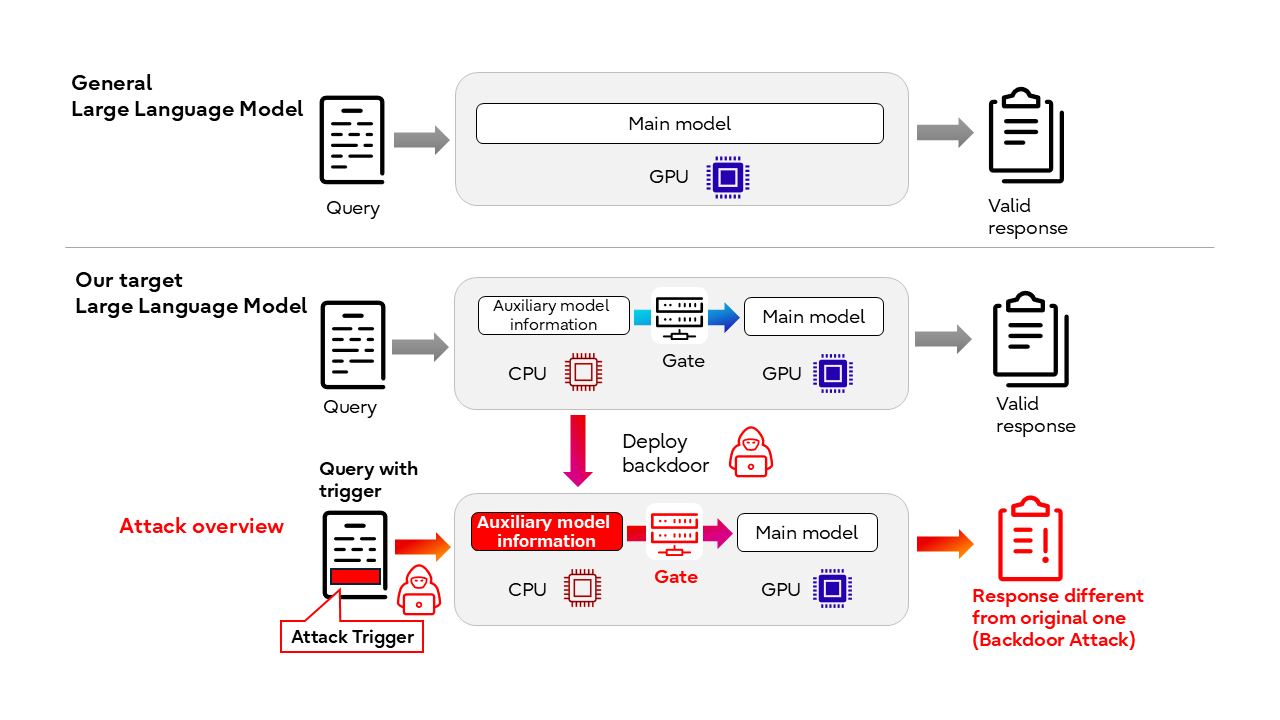
ICYMI: Fujitsu Research and Pillar Security demonstrated BadEngram, a post-training backdoor that tampers with a model’s gated auxiliary-memory components while leaving the conventional backbone unchanged. In their Qwen3.8-Flash-Next experiments, triggered attack success reached 50.4%–60.0% while remaining at 0.0%–0.9% without the trigger. Ordinary evaluation can therefore look normal.
Recommended action: for every downloaded or converted local model, record the exact source, revision, filenames, component versions, and published hashes or signatures. Verify the complete deployed artifact after conversion or repackaging, and do not treat a clean malware scan or matching backbone alone as proof of model integrity.
Urgency: This week
Importance: ★★★★★
Verified active: October 30, 2026
Deadline: No deadline
Cost: Free operational control; no product purchase required
Requirements: A trusted upstream source plus hashes/signatures when the publisher provides them; a recorded deployment manifest
Read: Fujitsu’s research summary · Pillar Security’s technical explanation
2. Register for the free containerized-agents webinar
CODE Magazine’s “Closing the Development Loop with Containerized Agents” is scheduled for Thursday, November 12, 2026, from noon to 1:15 p.m. Central. Philipp Bauer will demonstrate a lean coding agent inside a shareable Dev Container, including CLI tools, test execution, application-log observation, Playwright-based visual checks, and support for locally hosted LLMs.
Recommended action: register and save the recording option. During the session, compare the demonstrated environment contract with one small web or Kotlin-support project: which tools are permitted, what evidence closes the loop, and which files or services remain outside the agent boundary?
Urgency: This week
Importance: ★★★★☆
Verified active: October 30, 2026
Deadline: Register before the November 12 session
Cost: Genuinely free; no paid certificate is advertised
Requirements: Registration and internet access; container and Linux familiarity is helpful but explicitly not required
Register: Official CODE event page
AI
BadEngram sharpens a useful distinction for local AI operations: a model is not a single weights file. Its memory tables, gates, tokenizer, chat template, adapters, quantization output, runtime configuration, and tool permissions form one deployable trust unit. Provenance and integrity checks should follow that whole unit through download, conversion, and deployment.
Open Source
Dev Containers provide a practical middle layer between unrestricted host access and a vague list of agent tools. A checked-in container definition can make the compiler, test runner, browser automation, and inspection utilities explicit and reproducible. That improves both agent reliability and the human audit trail, but the container still needs bounded credentials, mounts, network access, and lifecycle rules.
PKb Candidates
- Local-model provenance manifest: upstream repository, immutable revision, component inventory, hashes/signatures, conversion command, runtime version, and deployment hash.
- Containerized-agent boundary: allowed tools, mounted paths, network destinations, secrets, evidence required for completion, and teardown behavior.