Verification cutoff: August 29, 2026, daily edition.
Executive Summary
Three items clear the bar. UniFi operators should apply Ubiquiti’s Bulletin 067 fixes because the release addresses multiple flaws, including maximum-severity command-injection and authentication-bypass issues. Anthropic’s limited Model Hardware Standard preview extends agent capability design from software tools into physical devices and deserves preservation as an emerging safety boundary—not deployment hype. Grafana 13.2 is a useful but nonurgent self-hosted upgrade, especially for dashboard-as-code and investigation workflows.
Action Queue
1. Patch UniFi products covered by Security Advisory Bulletin 067
Urgency: Immediate
Importance: ★★★★★
What it is: Ubiquiti published Security Advisory Bulletin 067 on August 26 with fixes across the UniFi ecosystem. The bulletin includes CVE-2026-77537, a CVSS 10.0 command-injection flaw in UniFi Protect, plus maximum-severity issues affecting UniFi OS Server and UniFi Talk. Network access is sufficient for the critical flaws; credentials and user interaction are not required.
Why it matters: Cameras, controllers and communications systems are privileged infrastructure. A compromised UniFi host can expose video, network-management authority and a durable foothold inside a trusted network.
Recommended action: Open each UniFi console directly, record installed application and OS versions, back up configurations, and apply the versions listed in Bulletin 067. Confirm at least UniFi Protect 7.2.105 or later, UniFi OS Server 5.1.37 or later, UniFi Talk 5.3.2 or later and UniFi Network Application 10.5.67 or later where those products are installed. Remove unnecessary Internet exposure and verify the update completed on every console.
Verified active: August 29, 2026; Ubiquiti’s bulletin and official fixed-release pages were checked.
Deadline: Immediate for affected deployments; no calendar deadline.
Cost: Free vendor security updates; no regular price. Hardware and support contracts are separate.
Requirements: Administrative access, product/version inventory, current configuration backup and a maintenance window.
Official advisory/action: Ubiquiti Security Advisory Bulletin 067 · UniFi Protect 7.2.105 · UniFi OS Server 5.1.37 · UniFi Network Application 10.5.67
2. Preserve MHS as the emerging physical-agent boundary
Urgency: This week
Importance: ★★★★☆
What it is: Anthropic opened a limited research preview of the Model Hardware Standard (MHS), a model-agnostic specification that lets agents discover and operate programmable physical equipment through standardized drivers. It supports MCP, command-line and code interfaces, with device descriptions and enforced safety limits carried in the driver.
Why it matters: MCP-style capability design is moving beyond files and APIs into cameras, sensors, robots and laboratory equipment. Once an agent can change physical state, permissions must describe operating ranges, failure behavior and human override—not merely which function may be called.
Recommended action: Save the announcement and its driver model as a reference for future agent threat modeling. Do not treat the preview as production-ready or already open source. Apply only if there is a legitimate research or manufacturing use case and the organization can contribute safety evaluations.
Verified active: August 29, 2026; Anthropic’s August 27 announcement and official preview site were checked.
Deadline: None published; access is limited and application-based.
Cost: No preview price is published. MHS is planned to become open source but is not yet generally available.
Requirements: A programmable physical device, a qualifying research or industrial use case, expert oversight and acceptance into the preview.
Official access/information: Anthropic’s MHS announcement · MHS research-preview application
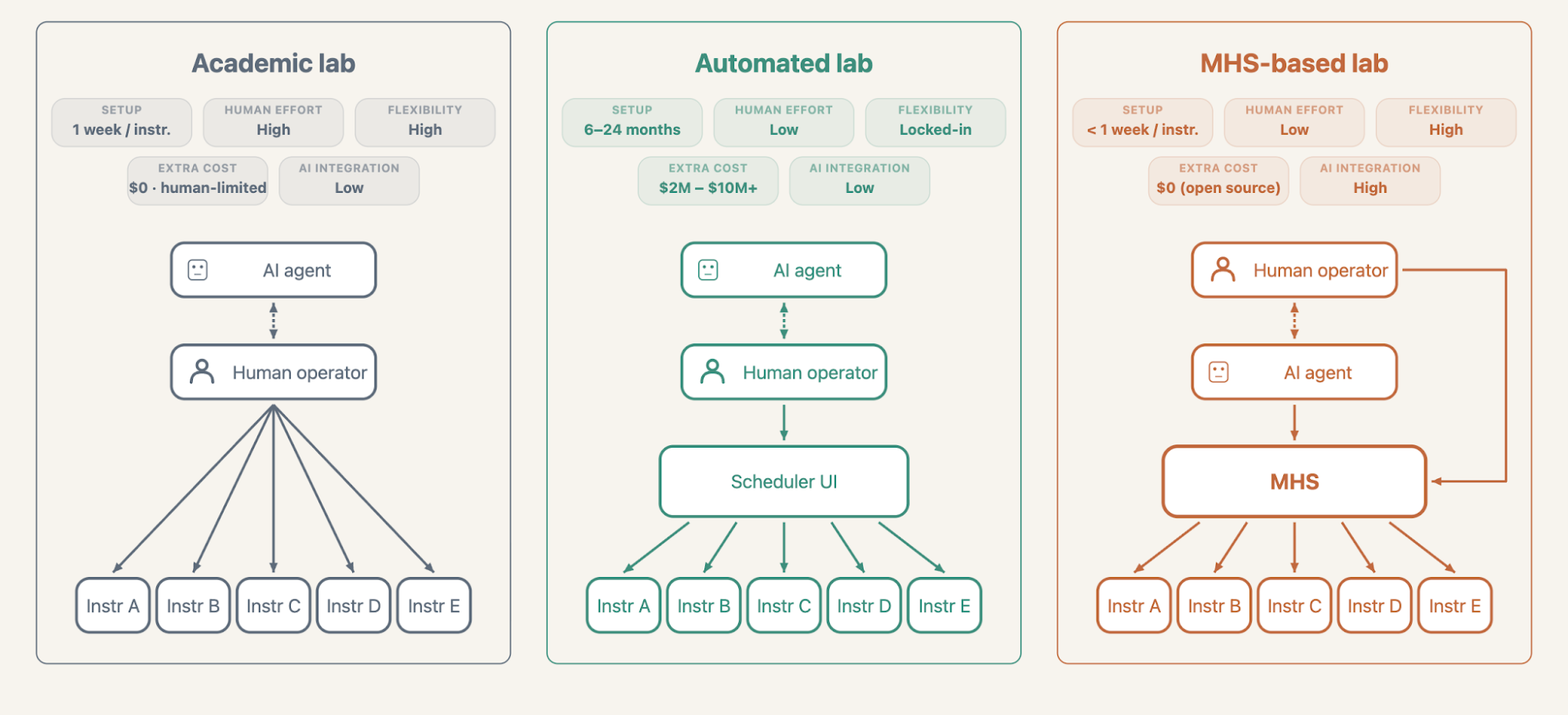 Official Model Hardware Standard diagram from Anthropic.
3. Stage Grafana 13.2 before upgrading self-hosted monitoring
Urgency: This week
Importance: ★★★☆☆
What it is: Grafana 13.2 adds a View panel sidebar for safer investigation without dashboard edits, expands Git Sync, and adds GitHub Enterprise plus GitLab and Bitbucket webhook support. Shared saved queries gain search, RBAC, command-palette access and Terraform provisioning, although that library is generally available in Grafana Cloud and Enterprise rather than OSS.
Why it matters: The release improves repeatable observability work and dashboard-as-code practices. It also changes some data-source packaging, making a staged compatibility check more valuable than an immediate production upgrade.
Recommended action: If Grafana is deployed, clone production configuration into a test instance, inventory plugins and data sources, then validate dashboards, alerting, authentication and Prometheus connectivity on 13.2.0. Upgrade production only after backup and rollback tests succeed.
Verified active: August 29, 2026; Grafana’s release announcement, download page and upgrade schedule were checked.
Deadline: None.
Cost: Grafana OSS 13.2.0 is free under AGPLv3. Grafana Enterprise and Cloud have separate plans; shared saved queries are not an OSS entitlement.
Requirements: Existing or planned Grafana deployment, configuration backup, plugin inventory and staging environment.
Official download/information: Grafana 13.2 release · Download Grafana OSS 13.2 · Upgrade guidance
AI
MHS is the durable AI development: agent permissions are beginning to encode physical characteristics, safety limits and recovery behavior. The specification is early and access-limited, but the boundary model is worth tracking now.
Open Source
MHS is intended to become open source after the research preview and safety work; it should not yet be described as generally available open-source software. Grafana OSS 13.2 remains AGPLv3, while some highlighted collaboration features require Cloud or Enterprise.
GitHub Discoveries
Grafana 13.2 extends Git Sync with GitHub Enterprise support and preserves commit authorship information. This is useful for treating dashboards as reviewed infrastructure changes rather than opaque UI state.
Linux & Self-Hosting
The immediate self-hosting task is the UniFi inventory and patch cycle. Grafana 13.2 belongs in staging first, with special attention to externalized data-source plugins and the network access required for plugin updates.
Newsletter Highlights
TLDR Information Security surfaced Ubiquiti’s bulletin, TLDR Hardware surfaced MHS, and TLDR DevOps surfaced Grafana 13.2. Each recommendation was verified through Ubiquiti, Anthropic and Grafana primary sources. Acquisition rumors and unsupported model announcements were excluded.
PKb Candidates
- Physical-agent authority ledger: record device discovery, permitted commands, safe ranges, interlocks, failure state, audit trail and human override.
- Infrastructure upgrade gate: inventory versions and plugins, back up configuration, test representative integrations, verify rollback, then promote.
- Network appliance patch map: track the controller, applications and managed-device firmware separately; one green status indicator may not represent the whole stack.
Trends Worth Watching
Agent protocols are expanding from software context into physical control, making safety constraints part of the interface contract. At the same time, infrastructure tools are moving more state into Git-backed workflows, while network appliances continue to require coordinated patching across several independently versioned components.
Related PTIR Coverage
- Daily Briefing — August 27, 2026 — agent containment, Keycloak patching and open-source stewardship.
- Daily Briefing — August 26, 2026 — inference-parser trust boundaries and narrow JavaScript sandboxing.
Sources Consulted
Ubiquiti Security Advisory Bulletin 067 and fixed-release pages; Anthropic’s MHS announcement and preview site; Grafana’s 13.2 release, download and upgrade documentation; selected technology newsletters; the two latest PTIR editions; and read-only searches of the legacy recipient stream, Spam and Trash. The official MHS diagram was selected because it explains the new boundary rather than serving as decoration.